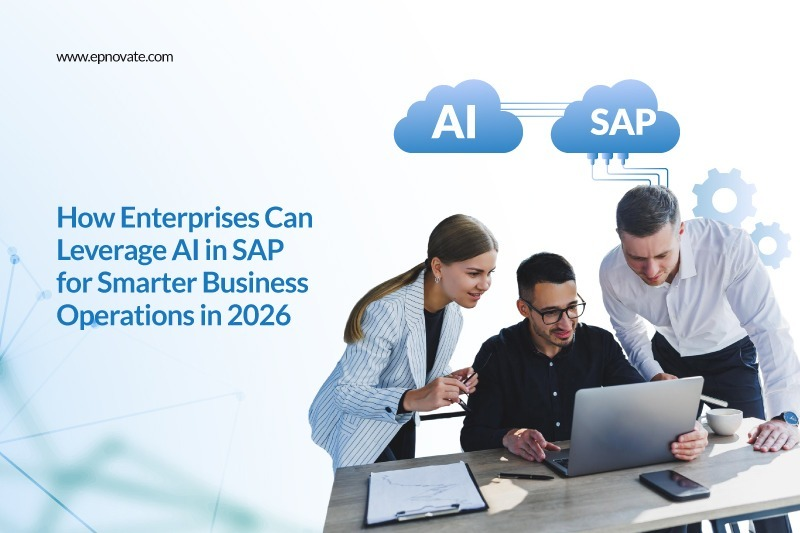
As enterprises continue to modernize their operations in 2026, artificial intelligence is becoming a core part of digital transformation strategies. Businesses are no longer using AI only for automation.
They are now embedding intelligence into finance, supply chain, procurement, customer service, and decision-making processes.
When combined with SAP ecosystems, AI helps enterprises improve efficiency, reduce operational risks, and unlock real-time insights across departments.
Organizations investing in reliable SAP Implementation Services are gaining a competitive advantage by integrating AI capabilities directly into their SAP environments. From predictive analytics to intelligent process automation, AI-driven SAP solutions are helping enterprises operate faster, smarter, and more accurately.
Understanding AI in SAP
AI in SAP refers to the integration of machine learning, automation, predictive analytics, and intelligent data processing within SAP platforms and applications. SAP has expanded its AI capabilities across solutions like SAP S/4HANA, SAP Business Technology Platform (BTP), SAP Analytics Cloud, and SAP SuccessFactors.
These technologies allow enterprises to analyze large volumes of business data, identify patterns, predict outcomes, and automate repetitive tasks. AI in SAP is designed to support business users with real-time recommendations and data-driven insights rather than replacing human decision-making.
For enterprises managing complex operations, AI-enabled SAP systems create a more connected and responsive business environment.
Key Benefits of AI in SAP for Enterprises
1. Improved Operational Efficiency
AI automates repetitive processes such as invoice matching, inventory updates, report generation, and customer query handling. This reduces manual effort and helps teams focus on higher-value tasks.
2. Faster Decision-Making
AI-powered analytics provide real-time insights into business performance. Enterprises can quickly identify operational bottlenecks, forecast trends, and make informed decisions with greater confidence.
3. Enhanced Customer Experience
Businesses can use AI-driven SAP tools to personalize customer interactions, improve response times, and predict customer requirements more accurately.
4. Better Risk Management
AI models can identify anomalies, compliance risks, and fraud patterns before they become larger operational issues. This is particularly valuable for finance, procurement, and supply chain operations.
5. Scalable Business Growth
As enterprises expand, AI-enabled SAP systems help manage growing volumes of data and processes without significantly increasing operational complexity.
Core Use Cases of AI in SAP
1. Intelligent Finance Management
AI helps finance teams automate accounts payable, detect irregular transactions, and improve financial forecasting. Enterprises can also use AI for real-time cash flow analysis and expense optimization.
2. Predictive Supply Chain Planning
SAP AI solutions help organizations predict demand fluctuations, optimize inventory levels, and reduce supply chain disruptions. This improves operational continuity and customer satisfaction.
3. Smart Procurement
AI-driven procurement systems can analyze supplier performance, identify cost-saving opportunities, and streamline approval workflows.
4. Human Resource Automation
With SAP SuccessFactors, AI supports talent acquisition, employee engagement analysis, and workforce planning. Enterprises can improve hiring efficiency and employee retention strategies.
5. Customer Service Optimization
AI chatbots and intelligent ticket-routing systems help enterprises respond to customer queries faster while maintaining service quality.
AI-Powered SAP Tools and Solutions
SAP offers several AI-enabled tools designed to support enterprise transformation initiatives.
1. SAP Business AI
SAP Business AI integrates intelligent capabilities directly into enterprise workflows. It helps automate business operations and improve user productivity across departments.
2. SAP Joule
SAP Joule acts as a generative AI copilot that assists users with business insights, recommendations, and task execution across SAP applications.
3. SAP Analytics Cloud
This solution combines business intelligence, predictive analytics, and planning capabilities in a single platform. Enterprises can use it to generate forecasts and visualize operational performance.
4. SAP Business Technology Platform (BTP)
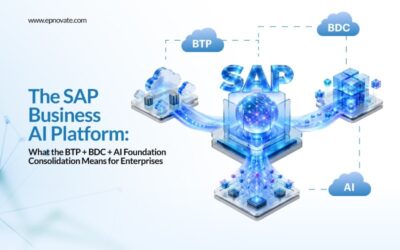
SAP BTP enables organizations to build, extend, and integrate AI-powered applications within existing SAP landscapes.
5. SAP S/4HANA with Embedded AI
SAP S/4HANA includes embedded AI functionalities that improve automation, forecasting, and operational intelligence in enterprise processes.
Working with an experienced SAP implementation company can help enterprises identify the right AI tools based on their industry needs and operational goals.
How to Implement AI in SAP Systems
1. Assess Business Requirements
Enterprises should begin by identifying operational challenges where AI can create a measurable impact. Common areas include finance automation, supply chain optimization, and customer service improvement.
2. Modernize Existing SAP Infrastructure
Legacy systems may require upgrades before AI capabilities can be fully integrated. Migrating to SAP S/4HANA often becomes a critical step in AI adoption.
3. Build a Data Strategy
AI performance depends heavily on data quality. Organizations should ensure their SAP systems have clean, centralized, and well-governed data.
4. Choose the Right Implementation Partner
Selecting a trusted SAP Implementation Service provider is essential for successful deployment. Experienced implementation teams help enterprises reduce risks, improve integration, and accelerate project timelines.
Start with Scalable Use Cases
Instead of deploying AI across all departments at once, enterprises should begin with focused use cases that deliver quick business value. This allows teams to measure ROI before expanding AI initiatives.
Future Trends: AI in SAP Beyond 2026
AI adoption within SAP ecosystems is expected to grow rapidly beyond 2026. Enterprises will increasingly use generative AI for business reporting, workflow recommendations, and intelligent automation.
Hyperautomation will become a major trend, combining AI, robotic process automation, and analytics to create highly autonomous business operations. Predictive and prescriptive analytics will also play a larger role in enterprise planning and risk management.
Industry-specific AI solutions within SAP will continue to evolve, helping businesses address unique operational challenges more effectively. At the same time, enterprises will place greater focus on ethical AI governance, cybersecurity, and data compliance.
Organizations that invest early in AI-enabled SAP transformation will be better positioned to adapt to changing market demands and operational complexities.
Conclusion
AI is redefining how enterprises manage operations, analyze data, and serve customers within SAP ecosystems. From intelligent automation to predictive insights, AI-powered SAP solutions are helping businesses improve efficiency, agility, and decision-making in 2026.
Enterprises looking to maximize the value of their SAP investments should work with an experienced SAP Development company in India that understands both AI integration and enterprise transformation strategies. With the right implementation approach, businesses can build future-ready operations that support long-term growth and innovation.