Supply chains have become more complex than ever before. Global disruptions, changing customer expectations, rising costs, and unpredictable demand patterns have forced businesses to rethink how they manage their operations.
Traditional supply chain models often struggle to keep pace with these challenges. Companies need faster decision-making, better visibility, and smarter planning capabilities to remain competitive.
This is where SAP Supply Chain Management is playing a critical role. By combining artificial intelligence, intelligent process automation, and connected data across the supply chain, SAP helps organizations build more agile and resilient operations.
As we move into 2026, businesses are increasingly focusing on technologies that provide accurate forecasting, automated workflows, and end-to-end visibility. These capabilities are no longer optional. They are becoming essential for long-term success.
What is SAP Supply Chain Management (SAP SCM)?
SAP Supply Chain Management (SAP SCM) is a suite of solutions designed to help organizations plan, manage, and improve their supply chain operations.
It connects key business functions such as:
- Demand planning
- Inventory management
- Procurement
- Manufacturing
- Logistics
- Warehouse operations
- Supplier collaboration
The goal is simple: ensure that the right products reach the right customers at the right time while controlling costs and maintaining efficiency.
Modern SAP SCM solutions work closely with SAP S/4HANA, creating a connected environment where information flows across departments without delays. This helps businesses make informed decisions based on current operational conditions rather than relying only on historical reports.
A modern SAP S/4 HANA Solution provides the digital foundation needed to connect supply chain processes across procurement, production, inventory, and logistics. This unified approach helps organizations improve coordination while supporting future business growth.
Today, SAP SCM continues to evolve beyond traditional planning systems by introducing AI-driven insights, automated workflows, and predictive capabilities that help organizations respond quickly to changing market conditions.
Why Supply Chains Need to Evolve in 2026
The supply chain landscape is changing rapidly.
Several factors are driving this transformation.
Increasing Supply Chain Disruptions
Natural disasters, geopolitical events, transportation delays, and supplier shortages can impact operations at any time. Businesses need systems that can identify risks early and support faster responses.
Rising Customer Expectations
Customers expect faster deliveries, better communication, and accurate order fulfillment. Meeting these expectations requires greater coordination across the entire supply chain.
Growing Data Volumes
Organizations generate enormous amounts of operational data every day. Without intelligent tools, valuable insights often remain hidden.
Pressure to Improve Efficiency
Businesses must control costs while maintaining service quality. This requires smarter planning, resource management, and operational visibility.
To address these challenges, organizations are investing in AI-powered analytics, process automation, and connected supply chain platforms that support faster and more accurate decision-making.
AI-Powered Supply Chain Management in SAP
Artificial intelligence is becoming one of the most valuable technologies in modern supply chain management.
SAP is embedding AI capabilities across its supply chain solutions to help businesses improve planning, forecasting, and operational performance.
1. Smarter Demand Forecasting
AI analyzes historical sales data, seasonal trends, customer behavior, and external market factors to improve forecast accuracy.
This helps organizations:
- Reduce excess inventory
- Prevent stock shortages
- Improve production planning
- Increase customer satisfaction
2. Predictive Risk Management
AI can identify potential disruptions before they become serious problems.
For example, it can detect:
- Supplier performance issues
- Delivery delays
- Inventory shortages
- Unexpected demand spikes
This allows supply chain teams to take action before disruptions affect business operations.
3. Intelligent Inventory Planning
AI-driven recommendations help businesses maintain the right inventory levels.
Organizations can reduce carrying costs while ensuring critical products remain available when customers need them.
4. Enhanced Supplier Management
AI can evaluate supplier performance based on quality, delivery timelines, and reliability. Procurement teams can use these insights to make more informed sourcing decisions.
Automation: The Backbone of Future Supply Chains
While AI provides intelligence, automation helps businesses act on those insights faster.
Automation reduces manual work, minimizes human errors, and improves operational efficiency.
Automated Procurement Processes
Routine purchasing activities can be triggered automatically based on inventory levels and demand forecasts.
Benefits include:
- Faster purchasing cycles
- Reduced manual intervention
- Better supplier coordination
Automated Order Processing
Orders can move through approval, fulfillment, and shipping workflows with minimal manual involvement.
This improves accuracy while reducing processing times.
Warehouse Process Automation
Automated warehouse operations help businesses manage inventory movements more effectively.
Examples include:
- Automated stock replenishment
- Intelligent picking recommendations
- Optimized storage allocation
Financial and Logistics Coordination
Automation can connect logistics and finance teams, ensuring accurate invoicing, shipment tracking, and payment processing.
These improvements allow employees to focus on strategic initiatives rather than repetitive administrative tasks.
Real-Time Visibility: The New Competitive Advantage
One of the biggest challenges in supply chain management has always been limited visibility.
When businesses cannot see what is happening across their supply chain, problems often go unnoticed until they impact operations.
Modern SAP supply chain solutions solve this challenge by providing connected views across suppliers, warehouses, manufacturing facilities, and distribution networks.
End-to-End Supply Chain Monitoring
Companies can track products, shipments, inventory levels, and supplier activities from a centralized environment.
This helps leaders understand operational performance at any given moment.
Faster Response to Disruptions
Real-time monitoring enables businesses to quickly identify:
- Delayed shipments
- Production bottlenecks
- Inventory shortages
- Supplier-related issues
Teams can take corrective action before disruptions affect customers.
Improved Collaboration
Shared visibility helps suppliers, manufacturers, logistics providers, and internal teams work from the same information.
This reduces communication gaps and improves coordination.
Better Business Resilience
Organizations with strong visibility can adapt more quickly to changing market conditions and unexpected disruptions.
Many businesses also rely on specialized SAP S/4 HANA Services to strengthen supply chain visibility, modernize operational processes, and support long-term digital growth initiatives.
Conclusion
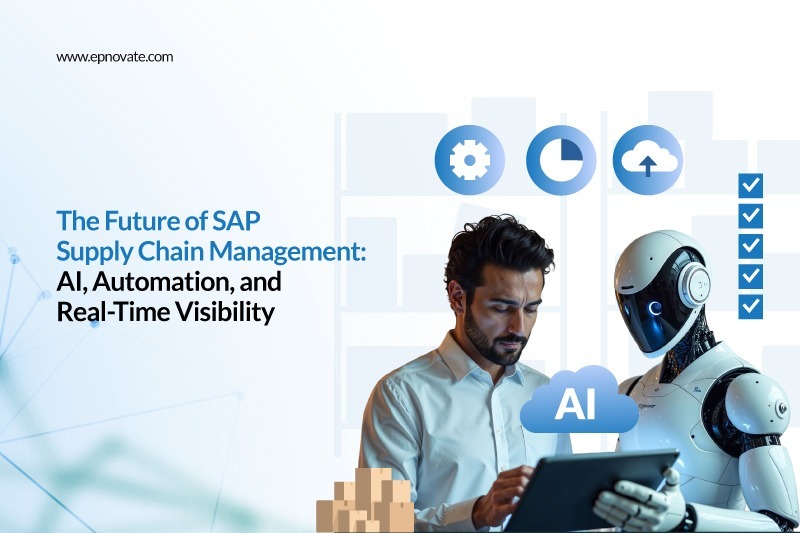
The future of SAP Supply Chain Management is being shaped by three powerful forces: artificial intelligence, automation, and real-time visibility.
Together, these capabilities help organizations move from reactive supply chain management to proactive decision-making. Businesses can forecast demand more accurately, automate routine processes, identify risks earlier, and gain a clearer understanding of their operations.
As supply chains continue to become more complex in 2026 and beyond, companies that embrace these technologies will be better positioned to improve efficiency, strengthen resilience, and deliver better customer experiences.
Organizations already using SAP solutions have a strong foundation for this transformation. By combining modern supply chain capabilities with SAP S/4HANA, they can build smarter, more connected operations that are ready for future challenges and opportunities.